The thing you are buying
Decision Card
The recommendation, its assumptions, the alternatives, what could change the call, and the first test. Every one it writes carries the same five headings.
What you sell, who buys it, what you charge, and what they buy next.
You shouldn't have to decide what the offer is again every time you go to sell it.
Bring what you have now. The Offer Machine gives you one recommendation with the reasoning and numbers attached. You make the final call.
$97 today, and it only goes up from here: $10 more at every 100 installs. Yours locks at purchase.
Built for the business you already run
It defines the package: scope, delivery, exclusions, price, payment terms, guarantee, and the capacity you actually have.
Then it compares whether a tier, a retainer, or a next purchase makes sense, so you stop quoting a new version of the business every time someone asks.
It works through what belongs around your bestseller: bundles, gifts, order bumps, upsells, subscriptions, and what the customer buys next. Every candidate runs against product cost, shipping, margin, and acquisition cost before it earns a place.
An add-on that would slow your main purchase down stays off until the numbers clear.
It works out who each plan is for, what belongs in each tier, what should trigger an upgrade, and what your subscription economics support charging.
Trials, onboarding, and expansion get the same treatment: each one modeled, none of it copied from another company's pricing page.
It builds the core offer first: who it serves, what it promises, how it's delivered, and what it costs. Only when the core produces its result alone does it weigh a premium version, continuity, or a backend.
Nothing gets added just because everyone else in the category adds it.
It models the business the way it actually runs: the job, the buyer, qualification, scope, price, and what each job leaves after delivery costs.
Then it works out the add-on, the repeat visit, and the referral path your capacity can actually carry.
Nothing to sell yet? Starting from zero is its own route. Bring a skill, an audience, a product idea, or experience, and it starts with the market and buyer worth serving.
Underneath all of them the job is the same: decide what the customer is buying, and make the numbers work before you spend more selling it.
The purchase
The thing you are buying
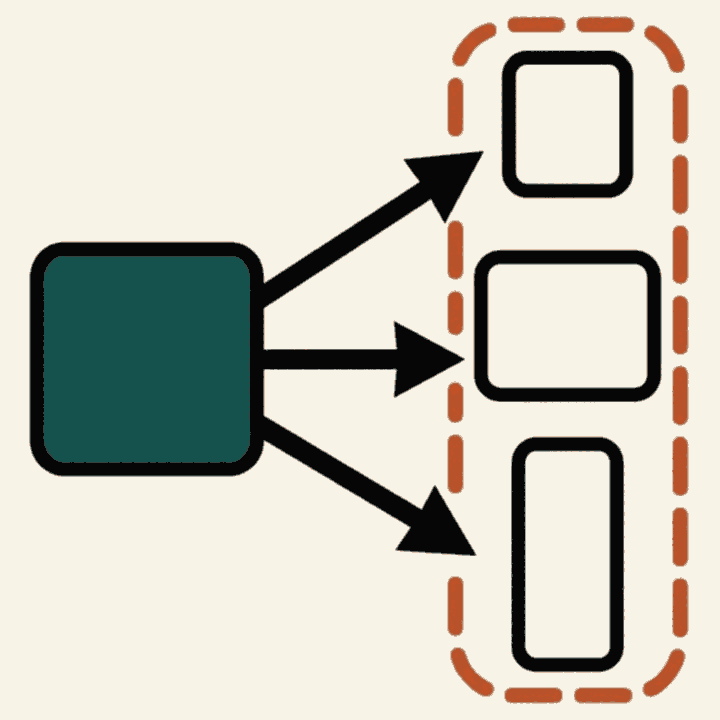
The recommendation, its assumptions, the alternatives, what could change the call, and the first test. Every one it writes carries the same five headings.
The buyer, package, scope, exclusions, price, terms, and delivery.
What each sale leaves behind, cash timing, capacity, and the numbers still missing.
The offer sentence, names, 25+ headline and claim candidates, objections, outreach, launch email, and ad angles.
What lands in your folder
Ten connected files. Every assumption, open question, and next test stays with the offer.
The offer comes first
A buyer clicks on one promise, reads a different version on the page, then gets a proposal with different scope and another price.
That drift gets expensive the moment you buy traffic or quote real work. The Offer Machine puts the buyer, package, price, proof, economics, and first test into one case before you build the next page, campaign, proposal, or sales call around it.

The run
Bring what you know and leave the rest open. The Offer Machine follows the route that fits your starting point, then checks the buyer’s demand before it recommends a price.
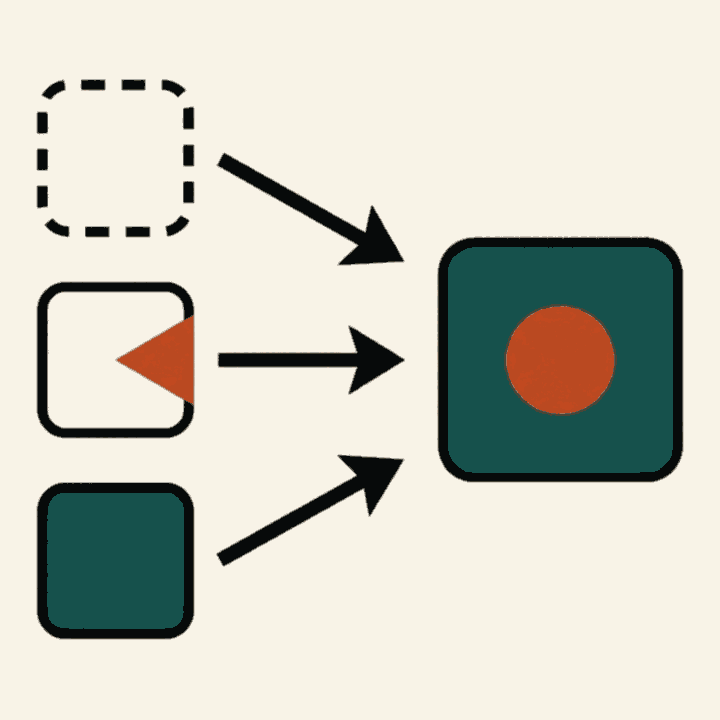
What you sell today, your customers, costs, capacity, and proof.
“I don't know yet” is a valid answer.
Four things get checked before a number is recommended:
If something important is missing, it flags that before pricing and shows which part needs to change.
The recommendation arrives with its assumptions, economics, proof work, two real alternatives, the first test, and the facts that would change the call.
Approve it.Change it.Reject it.
The next session starts from your decision, with the open items still open.
A fictional agency · the rebuild route, start to finish
This agency already has clients. The problem is that every time a new one signs, the offer changes.
00The offer that came in
The name stays the same.
The thing being bought does not.
The agency has a service people will pay for, but it has no stable boundary. The proposal is deciding the offer after the sales call.
That makes three things hard to trust at the same time: what the client owns, whether $4,000 is the right price, and how many clients the team can actually carry.
New ads or better copy would only send more people into the same custom sales process.
One number is missing
How many delivery hours does this service actually consume when the scope is held constant?
We don’t know yet.
So the $4,000 price stays as the control. It does not get raised or cut until the delivery model has a real number behind it.
Minimum repair
Keep the current retainer and the current price.
Freeze the scope around one Meta account, one weekly decision review, four creative briefs a month, one landing-page review, and written next actions. Everything else becomes an exclusion or a separately priced job.
Core recommended
Paid Growth Review
A recurring decision service for DTC founders already spending on Meta who need a senior read on what should happen next.
Each week the client gets the account reviewed against the numbers, the next decision written down, and the work required to support that decision.
Fixed scope
Radical alternative
Become the client’s full revenue team.
Take over media, creative production, CRO, email, landing pages, and growth strategy under one larger engagement.
Paid Growth Review, for DTC founders already spending on Meta.
A fixed monthly package built around one job: deciding what the account should keep doing, what should change, and what deserves the next test. Keep the current $4,000 price as the control while delivery hours are measured.
The agency does not need another service. It needs one version of the service it already sells.
This rebuild keeps the existing buyer and the work they already value, then removes the parts that make every proposal and every account different.
The buyer has recent Meta and order data worth reviewing. Someone on the client side can approve the decisions that come out of the review.
And the existing $4,000 price only survives if the fixed scope leaves enough contribution after the real delivery hours are known. That last number is still open.
Minimum repair. Freeze the current retainer without changing the positioning.
Radical alternative. Become the full revenue team.
Put the rebuilt scope onto three real accounts. Track the actual delivery hours and every request that falls outside the new boundary. Then rerun the economics.
If the current price cannot support the work, change the scope or the price before selling the rebuild again.
What has to be true
The buyer has to value judgment enough to pay for it without expecting unlimited execution. The team has to stay inside the boundary it sells. And the delivery hours have to support the price.
The first two get tested in the sale and the work. The third is still missing.
We don’t know yet. That is the next number to earn.
Proof state
Control
Reverse the recommendation if buyers repeatedly reject the narrower job, the boundary cannot be held, or the economics fail once the missing hours are entered.
A fictional agency, used here to show how the rebuild route runs. The package ships six complete worked examples, one of them a service business. No customer result is being claimed.
One more decision: when the answer is add nothing.
A fictional emergency-lighting kit is being tested at a $119 target. No orders are open. The Machine maps continuity and backend, then writes add nothing into both: the kit has no honest replenishment cadence, and no usage evidence supports another product yet.
It will not invent a subscription because the money-model diagram has a box for one.
The obvious question
Why not just ask ChatGPT to build the offer?
You can. A blank chat can give you a price and a package before it checks whether the buyer has a reason to pay, what they can use instead, or what has to be true for the offer to work.
The service came in at $4,000 a month, and the missing number was the delivery time once the scope stopped changing. The Offer Machine did not quietly assume that number and make the economics work. It left the price as the control, marked the input as missing, and made measuring it part of the next decision.
The recommendation keeps that reasoning attached: what it knows, what it assumes, why this direction won, and what would change the call. You can inspect the whole thing before you approve it.
The offer
$97 · then $107 · then $117 · then $127 · every 100 installs
One finished offer case. Your recommendation, buyer, package, price, economics, proof work, first test, and the reasoning behind it, kept together in ten connected files.
It starts from where you are now. Build from zero, rebuild something weak, expand something that already works, or run price, economics, stress test, and handoff on their own.
Price and claims get checked before you use them. The Machine weighs the buyer, timing, alternatives, costs, capacity, and contribution, then keeps the strongest claim your current proof can carry.
Your first selling material is included. Names, headlines, objections, outreach, a launch email, ad directions, and the first test worth running.
Nine coordinated skills + six complete teaching cases. Includes the download and setup instructions for your chosen AI.
Five-minute setup, with me showing you the steps. Follow the video, then answer the Machine’s questions. It checks the installation and guides you from there. No prompts to dream up.
Ship the offer and I’ll review it. Put it in front of real buyers within 30 days, send me the link, and I’ll tell you what holds, what leaks, and what I wouldn’t spend another dollar on yet. One offer. Written reply. No call.
14-DAY REFUND. LIFETIME UPDATES, NO EXTRA CHARGE. THE PRICE CLIMBS $10 AT EVERY 100 INSTALLS AND YOURS LOCKS AT PURCHASE.
Questions
The ten-file case shown above, built around one recommended offer for you to approve. The Machine is reusable, so the same structure builds, rebuilds, expands, or stress-tests another offer later.
Your download arrives by email. Open Start Here, choose the path for your AI, and use the quickstart that matches your situation. You pick Guided or Autopilot on the way in.
No. It saves the offer you have today and finds the main thing holding it back. If the core needs work, you get the smallest useful repair, the rebuild it recommends, and a more radical alternative. If the core is viable, it stays intact while the Machine looks for the smallest expansion worth testing, including adding nothing.
No. Guided pauses at every material business decision so you steer it as it happens. Autopilot completes a first pass for you to review. Assumptions and missing inputs stay visible in both, and nothing goes to market without your approval.
Then the Machine freezes the core instead of rebuilding it. It evaluates packages, bumps, upsells, downsells, continuity, backend, referral, and adding nothing, then recommends the smallest expansion worth testing. If you don't need that decision either, save the $97.
Claude or Codex are good places to start. ChatGPT Work with Skills is supported too. Your access page gives you the right download and shows you the setup. Using something else? Email me and I’ll help you check what works.
Missing stays missing. The Machine shows which unknowns could reverse the recommendation and turns them into research or test work before you commit.
No. It keeps the hardest version in the Claim Bank, shows what would have to become true, and turns the gap into product, proof, or test work. Until then, it gives you the strongest line your current evidence can carry.
Neither. Brief it in Spanish, German, French, Portuguese or Italian and the interview, the offer case and the decision card come back in that language. Your numbers stay in your currency; the model treats euros or pesos exactly like dollars. What it ships in English are the worked examples, and that is the part worth noticing: what it learned from them is how an offer gets decided, and that carries into any language. Buyers so far sell in more than a dozen countries.
It creates the first Sell Kit: names, claims, three ways to lead the page, bullets, objections, outreach, a launch email, ad directions, and a one-page sales argument. The Copy Machine and Meta Ads Machine take those pieces into deeper production when you need it.
Deciding the offer is the first job, and it's this one. Writing it is the second. Selling it to strangers is the third. Each Machine works alone, and the handoff you approve here feeds the other two, so you answer the questions once.
Approved buyer, promise, package, price logic, proof plan, and angles.
You are here · $97Ads, pages, emails, advertorials, and full sales arguments from the approved offer.
$67 03 / SELLTakes the approved angles to cold buyers, picks which to test first, and tells you which ones earned more spend.
$67Built by the operator behind five brands approaching eight figures, spending seven figures a month on ads. Every one of them had to answer the same three questions this Machine answers. Verify: andrejilisin.com

Put the buyer, package, price, proof, and first test in one case. Every ad, page, proposal, and sales call that follows starts from the same offer.
Install The Offer Machine, $97The Full Stack
The Offer Machinebuilds the offer and recommends the price$97
The Copy Machinewrites your ads, pages, and emails$67
The Static Ads Machinedesigns the ads people stop for$67
The Meta Ads Machinebuilds the next Meta test and shows you what it proved$67
The Google Ads Machinereads Google like a senior buyer$47
The Email Machineturns your list into repeat sales$97
Bought one at a time$442
$347 You save SAVE $95 compared to buying one at a time
One setup guide for everything you own.
All six Machines in one download, on one business brief, and $95 under today's six prices. Add them one at a time later and the memory still carries across; the difference is price and timing.
Every Machine climbs $10 at every 100 installs, and this price is built from all six. It only moves up.
PAY ONCE. YOURS FOR GOOD. ALL SALES ON THE FULL STACK ARE FINAL.